
Sourcing strategy, inventory planning and logistics tips for procurement teams that can't afford production downtime.
The last five years have taught every procurement team the same lesson: a chemical supply chain built purely on lowest landed cost is fragile. Shipping rates spike, factory audits fail, a single container is delayed, and a plant that ran smoothly for a decade suddenly can't produce.
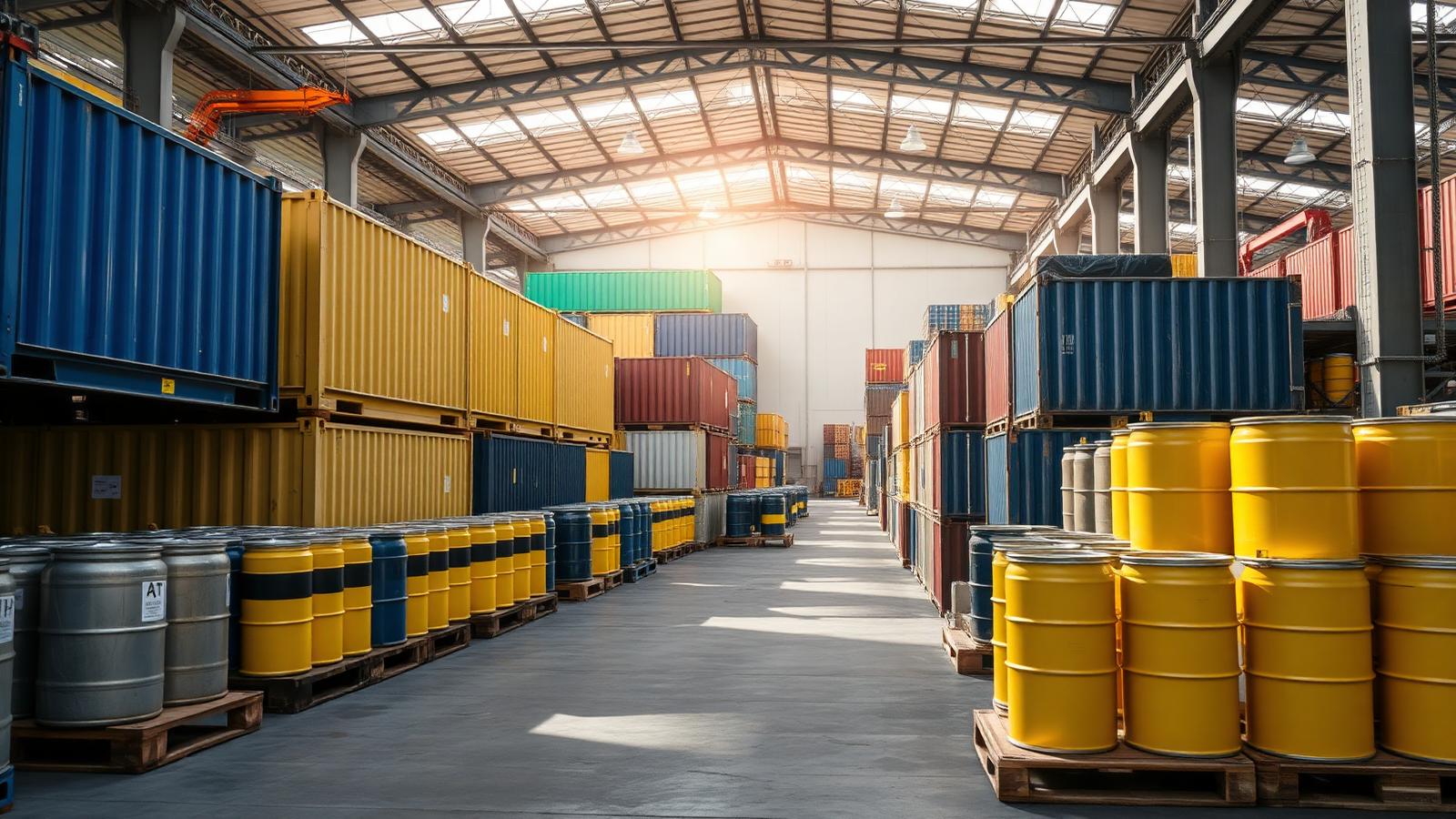
Three sourcing principles that survive the cycle
- Dual-source every critical input from geographies that don't share the same port or the same regulatory regime.
- Qualify a trader alongside your primary manufacturer — traders can consolidate, warehouse and re-label at a speed a factory can't.
- Treat COA and TDS documentation as part of the specification, not an afterthought.
Segment your spend before you plan
| Category | Risk profile | Strategy |
|---|---|---|
| Critical, single-source | Plant stops without it | Dual-source + 60 days stock |
| Critical, commodity | Available but volatile price | Index-linked contract, 30 days stock |
| Non-critical, specialty | Long lead time | Blanket order with call-offs |
| Non-critical, commodity | Low | Spot buy |
Inventory: fixed days-on-hand, not fixed tonnage
Peg minimum stock to production days, not to a static kilogram target. As your throughput grows, the buffer grows with it — and shrinks in soft quarters so you're not carrying dead working capital.
A workable formula for the reorder point is: average daily consumption × (supplier lead time in days + safety days). For imported specialty chemicals, use actual delivered lead time from the last four shipments, not the supplier's quoted lead time — the gap is usually two to three weeks.
Logistics: pre-approve the second-best route
Every critical import should have a documented Plan B: an alternative port of entry, an alternative Incoterms mix, and a courier-friendly small-parcel option for emergency bridging. When your Plan A ship is late, you don't want to be negotiating from scratch.
Qualification checklist for a new supplier
- Batch-wise COA against your own specification, not the supplier's house standard
- MSDS in the destination country's required format and language
- Packaging trial — 25 kg bags vs 1 MT jumbo — before the first full container
- Documented HSN/CAS numbers and country of origin for customs
- Reference from at least one buyer in your own industry
- Trial order of 1–2 MT before committing to a supply agreement
Metrics worth tracking monthly
- On-time-in-full (OTIF) rate per supplier
- Actual vs quoted lead time, rolling 6 months
- Days of cover for every critical SKU
- Quality rejection rate by batch
- Landed cost per kg, split into material, freight and duty
“The cheapest chemical is the one that actually arrives on the day your plant needs it.”
Mauryansh Impex works with buyers across India, the Gulf, Europe, the USA, Africa and Southeast Asia to plan multi-quarter supply schedules, hold consignment stock, and coordinate multi-modal export logistics.